
Flat Roof Drainage & Ponding Repair in Manitowoc, WI
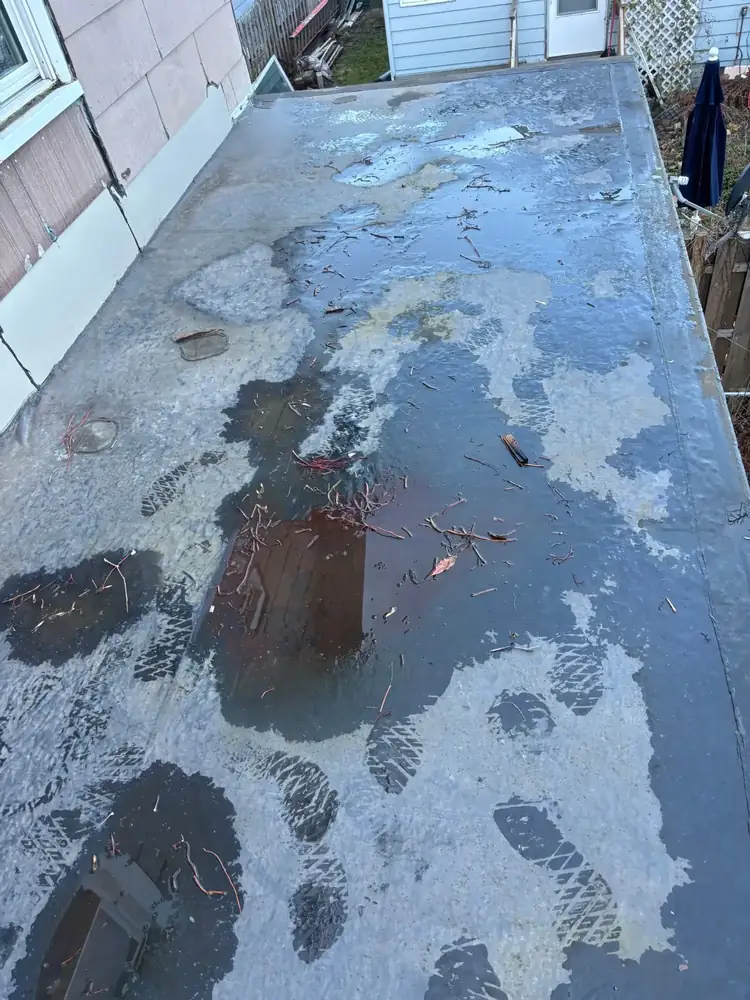
Ponding water is standing water still on a roof 48 hours after rain. It ages membranes faster, it finds every weak lap, it adds weight, and in a lakeshore winter it turns into a sheet of ice that blocks the drain for everything melting after it. Ponds form where the roof is low between drains, where a deck has sagged, behind rooftop units and parapets, and where drains are clogged or set too high. Near the harbor and the river, nesting gulls add feathers, nesting material and debris that clog strainers. We find why the water is staying, then fix it: tapered insulation or crickets to give water a path, drains added or relocated, scuppers enlarged, overflows added, and drain bowls, clamping rings and strainers repaired.
What's included
- Ponding survey after rain
- Tapered insulation and crickets
- New or relocated roof drains
- Larger scuppers and conductor heads
- Overflow drains or scuppers
- Drain bowls, clamping rings and strainers
- Debris and nesting material cleared
- Gutters and downspouts on low-slope roofs
Sound like your roof?
- Water still on the roof two days after rain
- Dirt rings and algae where water dries
- Ice sheets in the same spot every winter
- Drains that sit higher than the roof around them
- Leaks near drains
Drainage & Ponding — FAQs
Small puddles that dry within 48 hours are common. Water that sits longer shortens the roof’s life and should be fixed. See ponding water on flat roofs.
Sometimes. A cricket, a tapered section, or a lowered or added drain can solve a local pond. Widespread ponding is usually best fixed with tapered insulation during a re-roof.
It can be: nesting material and debris clog drains and strainers, and droppings foul rooftop units. Regular clean-outs keep drains working. Gulls and their nests can be legally protected, so removal and deterrents need to follow the rules.